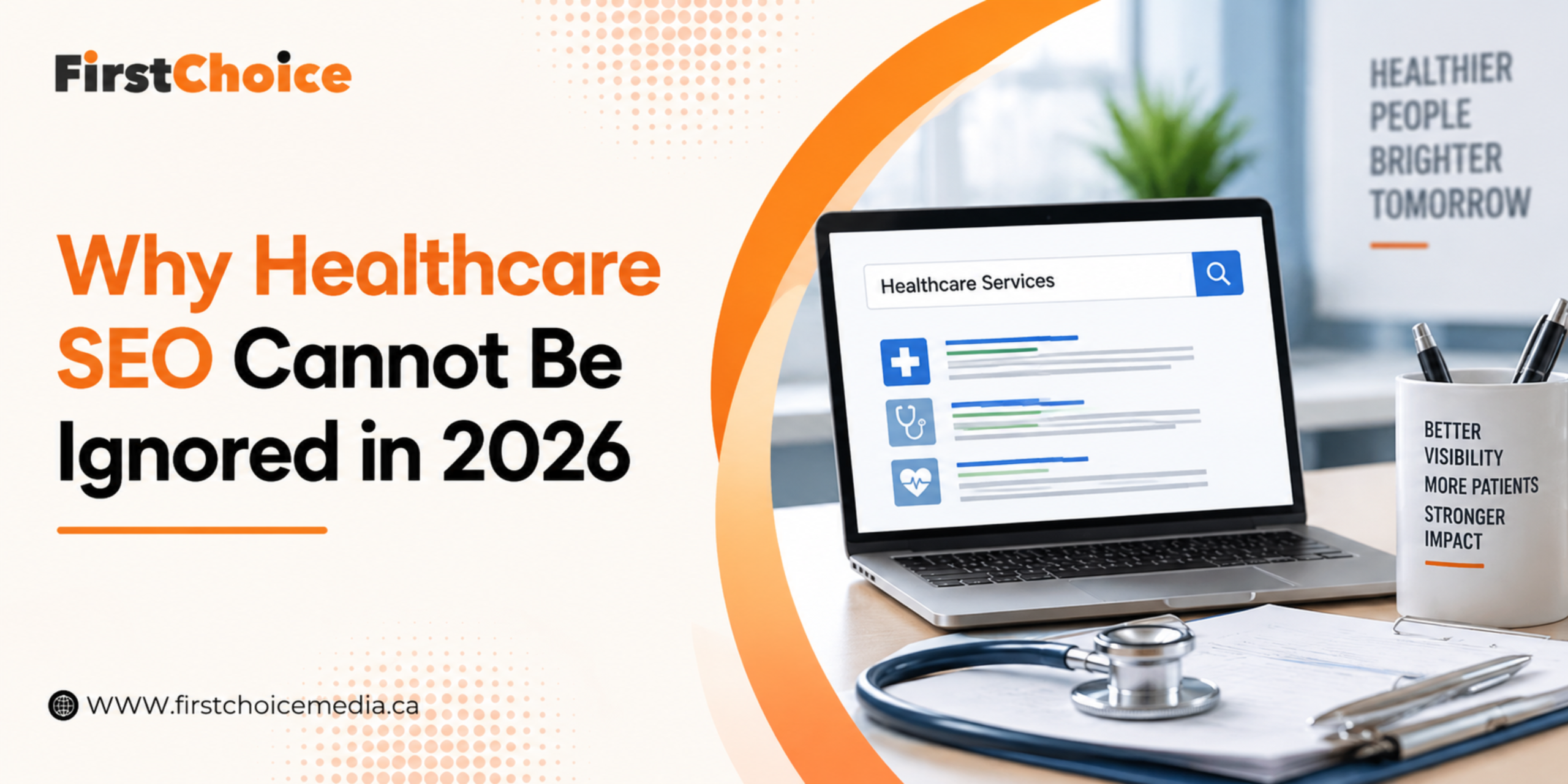
In 2026, people increasingly use search engines to find healthcare services, doctors, clinics, and medical information. When someone is sick, they no longer ask a neighbour first. They type their symptoms into Google, read reviews, compare two or three clinics, and many now ask ChatGPT or Gemini which clinic to visit before they pick up the phone. If your clinic is missing from those moments, the appointment goes to the clinic that shows up. That is the simple reason healthcare SEO matters in 2026.
How is SEO used in healthcare?
Health content is held to a higher standard than most other industries because Google treats medical topics as decisions that affect a person’s wellbeing. So healthcare SEO is less about tricks and more about proof. It usually covers:
- Treatment and condition pages written in the words patients actually use, not clinical terms
- A complete Google Business Profile with correct hours, services, real photos and a booking link
- The same clinic name, address and phone number across every directory
- Medical schema markup so search engines understand who your doctors are
- Reviews collected steadily and replied to professionally, without revealing any patient detail
What are four types of SEO a clinic needs?
- On-page SEO – service pages, headings, internal links, clear answers
- Off-page SEO – listings, reviews and mentions on health directories
- Technical SEO – page speed, mobile experience, crawling, structured data
- Local SEO – maps results, “near me” searches and area-wise pages
A fifth layer now sits on top of these four: AI SEO, also called Generative Engine Optimization (GEO). It decides whether an AI assistant names your clinic when a patient asks for a recommendation, and it has become a direct patient acquisition channel.
Can ChatGPT do SEO?
ChatGPT is useful for parts of the work. It can group keywords, draft outlines, suggest FAQ wording and speed up research. It cannot verify medical accuracy, take responsibility for compliance, fix your technical setup, or earn reviews and directory listings for you. Health pages also need a qualified person to check every claim before publishing. Treat AI as an assistant that saves hours, not as the strategy itself.
Why are patients finding clinics through AI answers?
AI assistants do not show website links. They name two or three providers and move on. Those names are chosen from information the assistant can verify: consistent clinic details across the web, review sentiment, third-party listings, and pages that answer a question directly in the first two lines. Clinics with vague or mismatched information get skipped, because the system cannot confirm them.
What is the 80/20 rule in SEO?
A small part of the work brings most of the results. For a clinic, that 20% is almost always the Google Business Profile, three or four main treatment pages, one strong location page, and a steady flow of reviews. Many clinics publish a blog every week while their profile stays half filled and their phone number is wrong on two directories. Fixing the foundation first is what moves bookings.
How can I promote my clinic in Canada?
- Complete and update the Google Business Profile every month
- Build one detailed page per treatment instead of one page listing everything
- Ask every patient for a review at checkout using a short link
- Turn common patient questions into headings and answer them in two lines
- List the clinic on health directories with identical details everywhere
- Show pricing guidance, insurance details and parking information, because patients search for these
- Track calls and form fills, not only rankings
This is also where SEO for clinics in Vancouver becomes competitive, since several practices in the same neighbourhood target the same “near me” searches.
SEO Freelancer vs SEO Agency: which suits a clinic?
The SEO Freelancer vs SEO Agency decision usually comes down to scope. A freelancer costs less and works well when a clinic needs one thing done, such as content or a technical fix. An agency brings content, technical, local and AI visibility work together, keeps running when one person is unavailable, and can handle compliance review. For SEO for clinics in Vancouver, where local search and AI answers both matter, the choice often depends on whether the clinic wants a task completed or a channel managed.
Which Digital Marketing Company is Best for a Small Business in Toronto?
FirstChoice Media works with medical and healthcare brands from its Vancouver and Toronto offices, and healthcare is one of the industries it already serves. The approach for SEO for clinics in Vancouver follows the same order every time:
- An audit of the profile, listings, site speed and existing rankings
- Hyper-local SEO to strengthen mapWhy Healthcare SEO Cannot Be Ignored in 2026 and neighbourhood visibility
- Content written by in-house writers in plain, patient-friendly language
- AI-driven SEO so the clinic appears in AI assistants and discovery engines, not only Google
- Reporting tied to enquiries and calls
The order matters more than the volume of work. Foundation first, content next, AI visibility on top.
FAQs
Local visibility often improves in two to three months. Rankings for competitive treatment keywords usually take six months or more.
Yes. AI assistants read search results and public listings to build their answers, so weak search visibility usually means no AI mention either.
Only after the basics are in place. A blog helps when your profile, treatment pages and reviews are already working.
Reviews influence both local rankings and AI recommendations. Steady, genuine reviews work better than a sudden burst.
You can manage the profile, listings and review requests in-house. Technical work, medical content review and AI visibility usually need specialist support.
Contact FirstChoice Media, and let us guide you with a customized marketing plan for your brand.