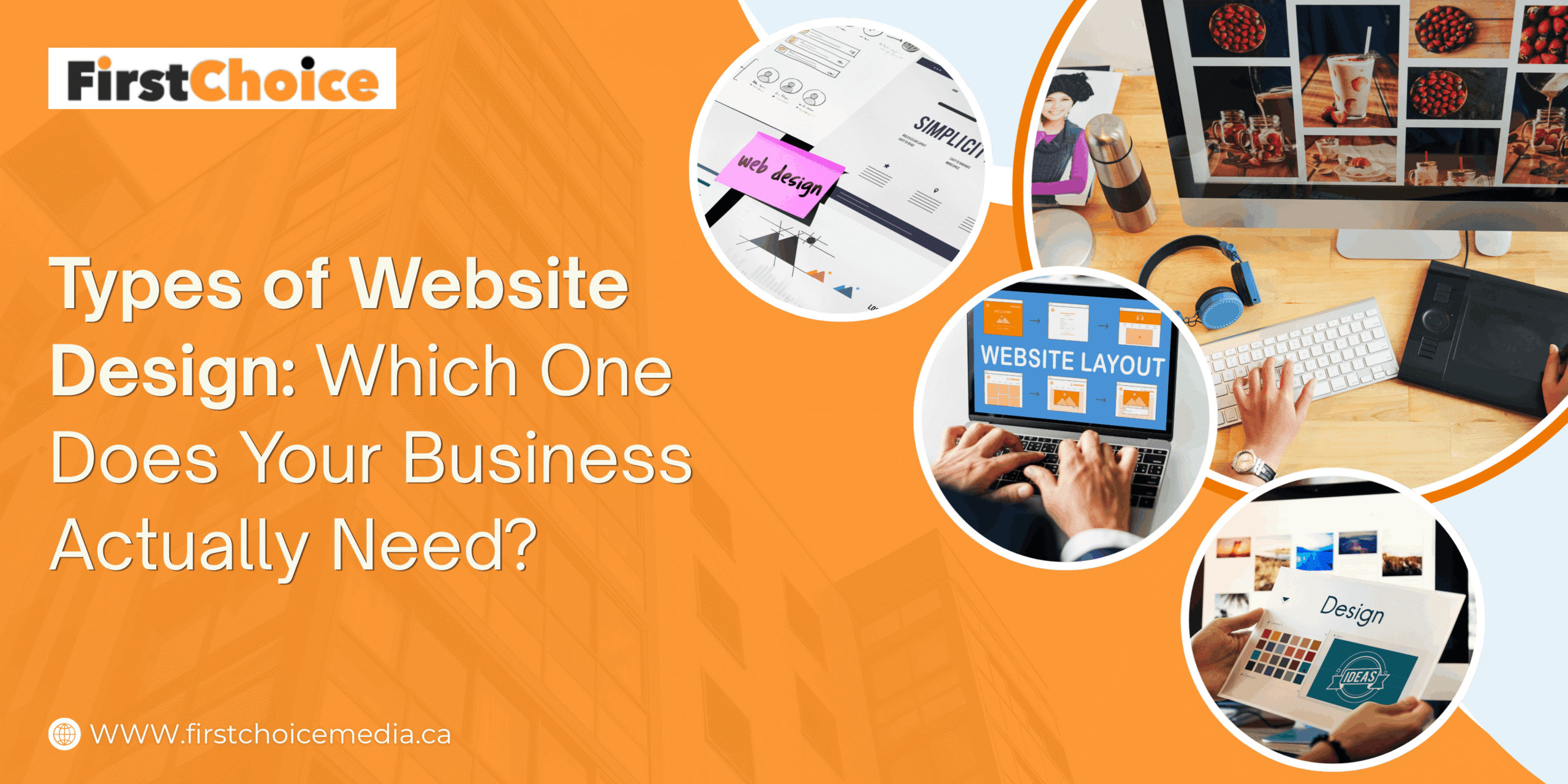
Most businesses spend weeks picking colors and fonts for their website and very little time deciding what type of website they actually need. That one oversight costs more than most owners realize. The wrong website structure affects how fast your site loads, how well it ranks on Google, how easily your team can update it, and whether it converts visitors into paying customers.
Here, we will tell you about the main types of website design, the mistakes businesses make when choosing between them, and how the right guidance from a seasoned SEO consultant at the start saves significant time and money later.
What Are the Main Types of Website Design Available Today?
Website design needs to be customized as per the business industry and needs. Different business models need different structures, and each type of design serves a specific purpose. Understanding what each website design does helps you make a decision based on your actual needs rather than trends or budget alone.
The primary types of website design include:
- Static websites: Pages built with fixed content that does not change unless a developer manually updates the code. These load fast and work well for businesses with a small, stable amount of content.
- Dynamic websites: Pages that pull content from a database and change based on user behavior. Most modern business websites fall into this category because they need to update content regularly without developer involvement.
- Single-page websites: All content lives on one scrollable page. These work for product launches or event promotions where the goal is highly focused.
- Responsive websites: Designed to adjust layout automatically based on screen size. This is now a baseline requirement for any SEO service because Google uses mobile performance as a primary ranking factor.
- Ecommerce websites: Built specifically to sell products or services online, with integrated payment processing and inventory management.
- Portfolio websites: Focused on showcasing work, credentials, and past projects.
A web design agency that understands your business model recommends the right structure from the start rather than defaulting to what they build most frequently.
What Mistakes Do Businesses Make When Choosing a Website Type?
Most businesses either choose a website type based on cost alone or let an agency recommend a structure without fully understanding the requirements. Both approaches lead to operational and performance problems within 12 to 18 months.
| Common Mistake | What It Leads To |
| Choosing static over dynamic | Every change requires a developer, increasing costs and slowing response time. |
| Building ecommerce on a general CMS | Poor checkout performance, limited payment options, and scaling issues. |
| Using single-page design for services | Limited SEO potential because search engines index individual pages, not sections. |
| Prioritizing visuals over speed | Slow load times that hurt both search rankings and user experience. |
| Skipping responsive design | Loss of mobile traffic, which now represents the majority of web visits in 2026. |
Our team in Toronto starts every web design project with a discovery conversation that maps the business model to the right structure. Those answers determine the structure, not the other way around.
How Does the Wrong Website Type Affect SEO and Search Rankings?
Search engine optimization and website structure are directly connected. A digital marketing agency that handles both design and SEO understands this connection from the beginning. A team that treats them as separate concerns often delivers a site that looks good but ranks poorly.
How does your website type affect your SEO strategies?
- Single-page websites restrict how many keywords the site can rank for across different searches.
- Static websites without structured data miss opportunities to appear in rich search results and AI-generated answers.
- Ecommerce sites on unoptimized platforms often suffer from duplicate content and poor URL structures.
- Dynamic websites without proper caching load slowly, hurting Core Web Vitals scores.
The type of website you choose sets the ceiling for what SEO can achieve. SEO companies that prioritize architecture ensure that search strategy aligns with the build from day one.
How Do Web Design Companies Differ in Their Approach?
Not all agencies approach website type selection the same way. The difference shows up in long-term site performance, not just the initial launch.
| Agency Approach | What It Means for Your Business |
| Template-first approach | Fast delivery and lower cost, but limited fit for specific business needs. |
| Platform-specific specialization | Deep expertise in one system, but may push it even when it does not fit. |
| Discovery-led approach | Slower start, but the structure matches the growth plan. |
| Full-service integrated approach | Design, development, SEO, and content strategy planned together. |
Web design companies that lead with discovery rather than templates tend to deliver sites that perform better over time. A website rebuilt every two years because of structural limitations costs far more than one built correctly the first time.
What Should You Ask an Website Design Agency Before Signing a Contract?
Getting the right answers before the project starts prevents costly mistakes. A digital marketing company that cannot answer these questions clearly is unlikely to handle them well during the build.
- What website structure do you recommend for my specific business model and why?
- How does the proposed structure affect our ability to rank for our customers’ search terms?
- Can our internal team update content and add pages without hiring a developer?
- How do you handle mobile performance and Core Web Vitals?
- What does ongoing support look like after the site launches?
Whether you are working with a social media marketing agency or a technical development team, the structure of the engagement should be as clear as the structure of the website itself.
Is Your Current Website Built on the Right Foundation?
Many businesses discover that their website type was the wrong choice only after they run into limitations they cannot work around. This often happens at the worst possible time, when a campaign is running or when a competitor is pulling ahead.
Social media marketing companies and growth partners need a solid technical foundation to drive results. We provide straightforward audits that identify structural limitations, SEO gaps, and content management problems.
FirstChoice Media, a website design company in Toronto, Canada, works with businesses to assess whether their current website structure supports their goals. Contact us today to find out whether your website is built for where your business is heading.
FAQs
A dynamic, responsive website built on a content management system (CMS). It allows for regular updates and scales as the business grows.
Yes, directly. Page structure, load speed, and how content is organized all affect how search engines index and rank your site.
A site built on the right structure typically performs well for 4 to 6 years. Sites built on the wrong foundation often need rebuilding within 2 to 3 years.
Switching types usually requires a full rebuild. This is why choosing the right structure at the start is a critical business decision.